
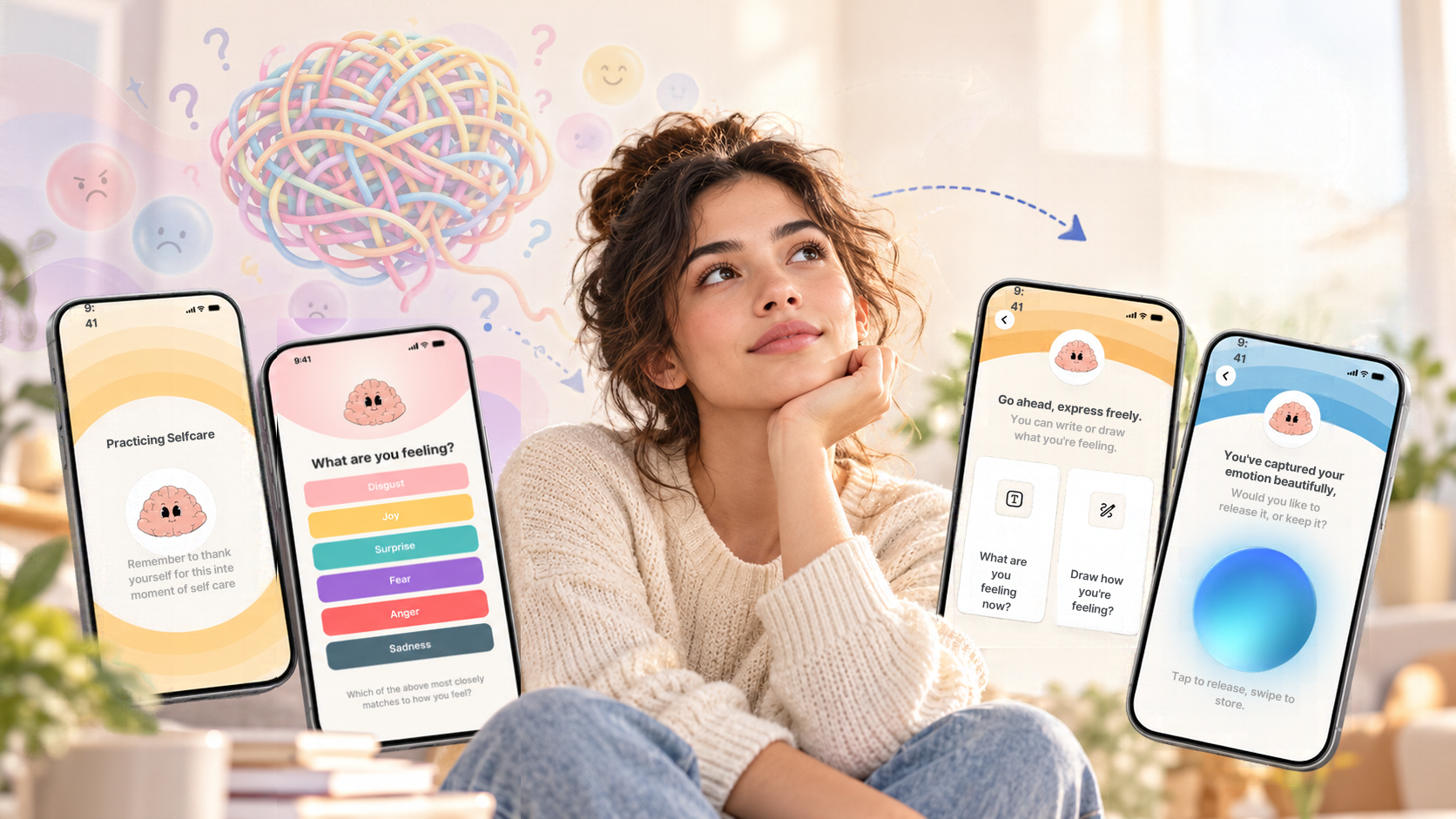
Sometimes, "I don't know how I feel" is the most accurate answer you can give.
Something happened. Maybe a conversation left you unsettled, a decision has been weighing on you, or you've noticed that you haven't felt quite like yourself lately. You know there's something going on internally, but when you try to explain it, the words don't come.
You might say you're fine because it's easier. You might call everything stress, even though that doesn't quite fit. Or you might keep thinking about the situation, hoping that enough analysis will eventually reveal what you're feeling.
Not knowing how you feel doesn't mean there's nothing to understand. Sometimes it means your emotional experience needs a little more attention, space, and curiosity before it becomes clear.
The goal isn't to force yourself to find the perfect emotional label. It's to learn how to explore what's happening without turning uncertainty into another source of pressure.
Why Might You Genuinely Not Know How You Feel?
Emotions aren't always experienced as neat, recognizable categories. In everyday life, several feelings can overlap, change quickly, or appear alongside physical sensations and thoughts. For example, you might feel relieved that a difficult relationship has ended while also feeling sad about losing it. You might be excited about a new opportunity but anxious about the uncertainty it brings. Both experiences can be true. There are several reasons emotional clarity can be difficult.1. You're Experiencing More Than One Emotion
Mixed emotions can make it hard to identify any single feeling. Happiness and sadness, anger and guilt, or hope and fear can exist together. Instead of asking, "Which one emotion am I feeling?" it may be more useful to ask, "What different feelings might be present?"2. You're Focusing on Thoughts Rather Than Feelings
When something upsetting happens, your mind may immediately begin interpreting it. You might think:- "Why would they say that?"
- "Did I do something wrong?"
- "What if this happens again?"
- "I should have handled that differently."
3. You've Become Accustomed to Putting Emotions Aside
Sometimes people learn to prioritize responsibilities, other people's needs, or practical solutions over their own emotional experiences. Over time, noticing emotions may become less automatic. This doesn't mean your feelings have disappeared. It may simply take more intentional attention to recognize them.4. You Don't Have the Words Yet
You may recognize that something feels uncomfortable without knowing whether to call it sadness, resentment, insecurity, disappointment, or something else. Developing a broader emotional vocabulary can help you make more specific distinctions. For instance, "I'm angry" might eventually become "I'm frustrated because I felt dismissed." That distinction can change how you understand your experience.What to Do When You Don't Know How You Feel
You don't need to solve your emotional experience immediately. A few gentle steps can help you move from uncertainty toward understanding.Step 1: Start With What You Do Know
Instead of demanding an emotional label, begin with observations. Ask yourself:- What happened before I started feeling this way?
- What have I been thinking about repeatedly?
- Have I noticed any changes in my energy, behavior, or concentration?
- Is there something I'm avoiding or wanting to address?
Step 2: Notice Physical Sensations Without Assigning Them a Meaning
Emotional experiences sometimes involve physical sensations, such as tension in your shoulders, a heavy feeling in your chest, restlessness, or changes in breathing. Notice what is present without assuming that a particular sensation always means a particular emotion. For example, a racing heart can accompany excitement, anxiety, exertion, or several other experiences."What am I noticing in my body right now?"
Allow the answer to be descriptive rather than diagnostic.
Step 3: Explore Possible Emotions
Once you've noticed the situation, your thoughts, and your physical experience, consider a few emotional possibilities. Maybe you're not simply "upset." Perhaps you feel disappointed because an expectation wasn't met, hurt because something mattered to you, or uncertain because you don't know what happens next. You don't have to select one answer immediately.Try This Reflection Prompt
"I might be feeling ______ because ______."
The word might matters. It gives you permission to explore without treating your first interpretation as a fact.
Step 4: Separate What Happened From What You Assume
Emotional uncertainty can become more confusing when facts and interpretations blend together. Consider these examples:| What Happened | What You Might Be Assuming | What You Might Be Feeling |
|---|---|---|
| A friend didn't respond to your message. | "They're upset with me." | Anxiety or insecurity |
| You received unexpected feedback. | "I'm not good enough." | Embarrassment or disappointment |
| Your plans changed suddenly. | "Nothing is going the way I want." | Frustration or uncertainty |
Step 5: Give Yourself Permission to Remain Uncertain
Sometimes you won't arrive at a clear answer after a few minutes of reflection. That's okay. You might understand your emotions better after resting, talking with someone you trust, or returning to the experience later. Emotional clarity is not a test you have to pass."I don't know exactly what I'm feeling yet, but I understand a little more about what might be affecting me."
A Simple Emotional Check-In to Try Right Now
You don't need a perfect emotional label to begin reflecting. Take a moment to explore what you're experiencing.Your Emotional Check-In
Choose the answers that feel closest to your experience. You can leave anything unanswered. 1. What best describes your experience right now?
2. What would help you explore it?
"Something I know about my experience right now is..."
This exercise is intended for personal reflection, not clinical assessment. Your answers are not submitted to MindFlow through this blog form.
Why Forcing Yourself to Feel Something Specific Can Backfire
When you're uncertain about your emotions, it's tempting to search for the right answer as quickly as possible. You might ask yourself the same question repeatedly, analyze every detail of an interaction, or compare your reaction to how you think you should feel. But emotional exploration is different from emotional interrogation. Questions such as "Why can't I figure this out?" can introduce self-criticism into an already confusing experience. A more supportive approach is to remain curious:"What might I be feeling, and what could help me understand it?"
You can acknowledge uncertainty without trying to eliminate it immediately.
How Guided Emotional Reflection Can Help
When you don't know how you feel, an open-ended question can sometimes be surprisingly difficult. Having a little structure may make the process more approachable. Rather than expecting yourself to explain everything at once, guided emotional reflection helps you explore your experience in smaller steps. This is the idea behind MindFlow. MindFlow is designed to help you pause, explore emotions, and express what's happening internally through a guided experience.01
Choose
Begin by exploring the emotions that may be present, even when you aren't completely sure.02
Explore
Reflect on your emotional experience and discover what feels most relevant.03
Express
Give your feelings a form through the app's emotional expression tools.04
Keep or Release
Choose how you want to relate to what you've expressed.When "I Don't Know How I Feel" Might Need More Attention
Occasional difficulty identifying emotions is a common human experience. However, if you frequently feel emotionally disconnected, persistently numb, or unable to understand your reactions, particularly when it affects your relationships, work, or everyday functioning, it may be helpful to speak with a qualified mental health professional. Difficulty identifying feelings can have different causes, and it isn't something that can be diagnosed from a single experience or online article. MindFlow can support personal emotional reflection, but it is not a substitute for professional mental health care.Frequently Asked Questions
Is It Normal Not to Know How You Feel?
Yes. Emotions can be mixed, subtle, or difficult to describe. Not immediately recognizing a feeling doesn't necessarily indicate a problem.What If I Feel Nothing at All?
Feeling emotionally numb or disconnected can occur for different reasons, including periods of significant stress. If it persists or causes distress, consider seeking support from a mental health professional.How Can I Get Better at Identifying My Emotions?
Regular emotional check-ins, expanding your emotional vocabulary, noticing patterns, and reflecting on experiences without judgment may help you recognize emotional differences over time.Can I Feel Multiple Emotions at Once?
Absolutely. You can feel relieved and sad, hopeful and afraid, or grateful and frustrated simultaneously. Emotional experiences don't have to fit into one category.Should I Journal When I Don't Know What I'm Feeling?
Journaling can be helpful, but you don't need to begin with a specific emotion. You can write about what happened, what you're thinking, what you're noticing, or what you wish were different.You Don't Need the Perfect Words to Begin
"I don't know how I feel" doesn't have to be the end of your reflection. It can be the beginning. You can start with a sensation, a thought, a memory, or a question. You can explore several possible feelings without committing to one. And you can return to the experience when you're ready.Clarity doesn't always come from thinking harder. Sometimes it comes from giving yourself a gentler way to explore.
Start With a Guided Emotional Check-In
When the words aren't coming, MindFlow gives you a structured way to explore what you're feeling, one step at a time.Start Your 7-Day Free Trial
Explore your emotions, reflect on your experiences, and express what matters to you with MindFlow.


Note: This article is for educational and self-reflection purposes only. MindFlow is an emotional reflection and wellness tool, not a medical service, diagnostic tool, or replacement for professional mental health care.